
Chester Previous Residents by Era
A sound Chester address history is a timeline, not one search result. The assessment record resolves a current parcel. Recorder instruments trace title. A directory identifies a name at an address only in its edition year, while a census is a household snapshot on its enumeration date. County Archives, DCHS, and the Register of Wills add historical event and estate paths. Use the source that actually speaks to the period being tested.
| Source | Years it reaches | Access route | What it adds |
|---|---|---|---|
| Recorder records | Records date to 1789; online copies 1799-present | Cloud Search, Fusion, or Recorder counter in Media | Recorded title chain, parcel and legal description. |
| Digitized Chester directories | Listed volumes from 1859-60 through 1906-07 | Delaware County History collection | Year-specific alphabetical and sometimes street context. |
| DCHS city directories | 1879-1931, then 1941, 1956, and 1959 | Delaware County Historical Society | Local physical directory run with gaps. |
| Telephone books | 1957, 1958, 1965, and 1970-present | DCHS | Later voluntary listing evidence where published. |
| Census | Released 72 years after enumeration | National Archives and library research access | Household evidence for one census date. |
| Chester birth register | 1889-1906 | Delaware County Archives index | Parent names and addresses in a historic event record. |
Labels matter. A recorded owner, a directory-listed person, and a census household member can all be part of the same address story without proving continuous occupancy.
Trace Chester Previous Residents Through Deeds
Delaware County Real Estate and Tax Records is the correct start for a present address because the county removed public name search. Resolve the address to its parcel ID and municipality. Then use that exact parcel ID in Recorder Cloud Search, which accepts parcel IDs, grantor or grantee terms, subdivision text, document types, and document numbers. Parcel ID is a steadier bridge than a street name when an older deed relies on lot, block, or subdivision language.
- Enter the current Chester address in the county property application and record its parcel ID and municipality.
- Search the parcel ID in Cloud Search, including dashes, and narrow by recorded date.
- Record the current deed's grantor, grantee, document number, recording date, deed type, and legal description.
- Use the prior party name and parcel or legal-description language to locate the preceding conveyance.
- Repeat backward, then pair each ownership era with directory, census, newspaper, or probate evidence for a household question.
- Grantor
- The party conveying an interest in a recorded instrument.
- Grantee
- The party receiving the interest shown in the instrument.
- Chain of title
- The sequence of recorded conveyances connected to a parcel or legal description.
- Legal description
- The lot, block, subdivision, or metes-and-bounds description that can remain useful when a street number changes.
Chester Deed Copies Back to 1799
The Recorder says Delaware County real-property records date to 1789 and states that online copies run from 1799 to the present. Its older published information identifies recording-index data from 1982 onward, so the two dates should not be flattened into a single claim. When a search points to an early item that is not digitally retrievable, call the Recorder or ask at the Media counter for the cited document, book, page, or historical-index path.
The assigned Recorder of Deeds overview image reflects the official land-record route for a Chester previous residents search. Documents establish a title trail and may name lenders, trustees, or prior parties, so they do not by themselves produce a household roster.
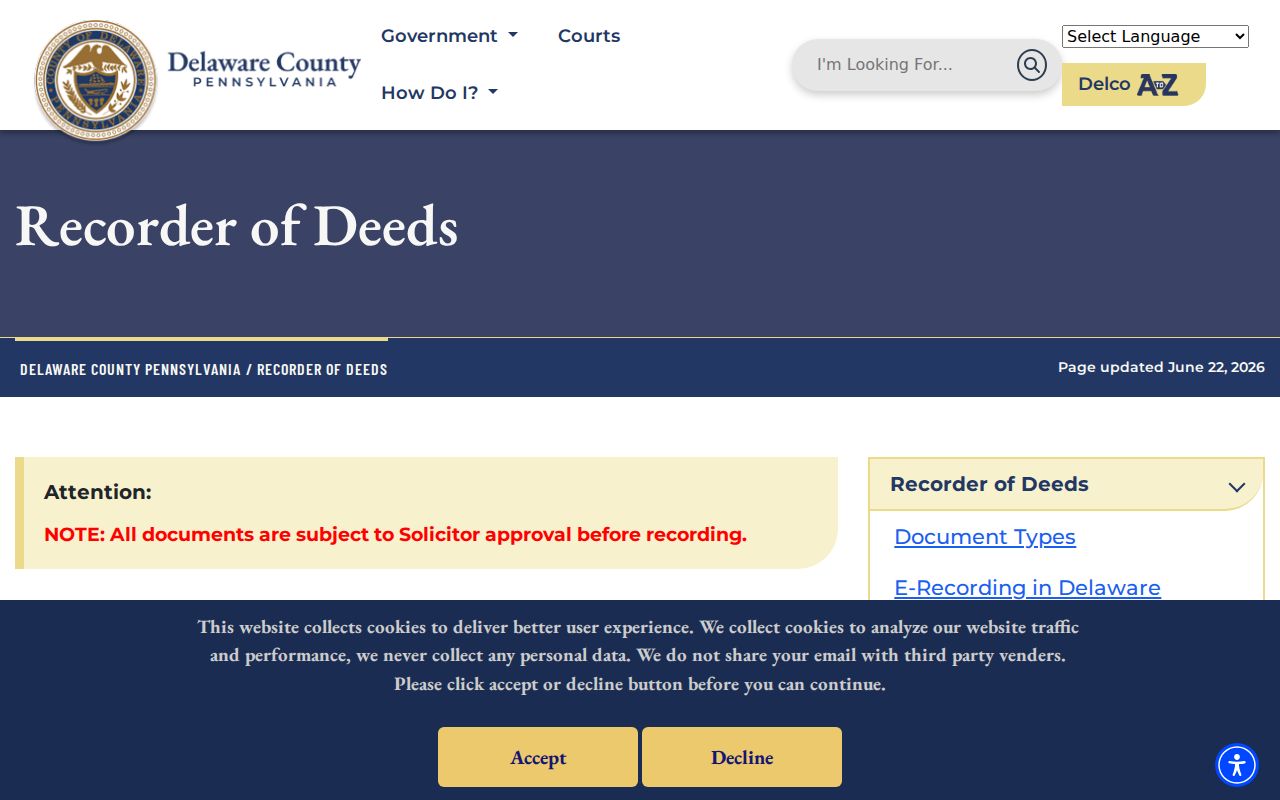
Online ordinary copies are stated as $0.50 per page, compared with $1 per page at the office. Electronic certification is available through Cloud Search, but current copy and certification charges should be checked with the Recorder before ordering.
Chester Previous Residents in Directories
Directory work adds the household layer that deeds often lack. The early 1859-60 Chester title describes inhabitants, occupations, places of business, dwelling houses, streets, institutions, and civic groups. The 1889-90 title explicitly advertises a street directory, and the 1891-92 edition includes Media. Read the title page and abbreviation key for each volume instead of assuming every volume has the same fields or geography.
Delaware County History supplies many digitized early editions, while the fuller collection discussion belongs with the Chester city directory collections. The screenshot below is the County Planning historic-research route that directs researchers to DCHS, the Archives, the municipal-history collection, PA-SHARE, and mapping resources.
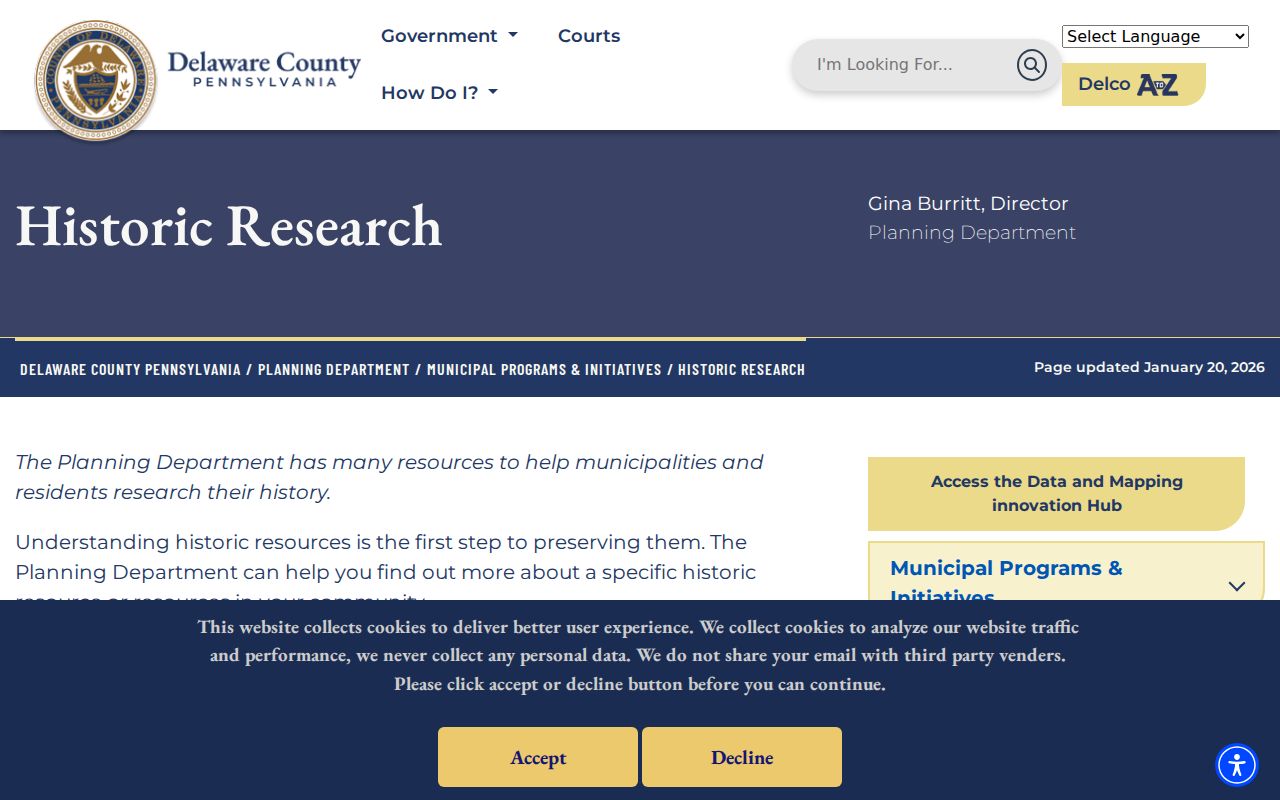
For each address era, copy the exact spelling, number, directory year, and scope. Check nearby directory editions. Pair a move with a federal census, which becomes public 72 years after the census date, and then look again at the parcel and deed trail.
- Find the name or address in the directory year closest to the deed date.
- Check earlier and later editions for the same street and for spelling changes.
- Compare the directory date to the released federal census for household context.
- Use maps, legal description, and the Recorder trail where the old address no longer matches a modern number.
Chester Address Names Over Time
Address continuity is a local research problem. The settlement was Upland in 1644, became Chester in 1682, incorporated as a borough in 1701, and became a city in 1866. Directory titles also shift scope: the 1889-90 edition includes South Chester, Upland, and Eddystone, while the 1891-92 title includes Media. An absence in one volume can reflect the title's boundary, not the absence of a household.
No citywide renumbering year or official Chester house-history guide was documented in the research. Compare the original number and street name with the matching Sanborn plate or atlas, the parcel's legal description, and the deed or plan. County Planning offers historic-research assistance at 610-891-5200 and Planning_Department@co.delaware.pa.us when an address will not resolve through the normal route.
Chester Birth Index Address Bridge
Delaware County Archives provides a direct Chester Birth Records index for 1889-1906. The index identifies a child's name, sex, race, date and place of birth, parent names and addresses, and the father's occupation. It is strong historical family-address evidence, but it is an event record. It cannot establish a current address or replace the later title and directory trail.
The assigned archive capture highlights the historical index route. When the address or parent name appears, keep the event date with the source label and use nearby directories, probate, cemetery, or newspaper material for the later family path.
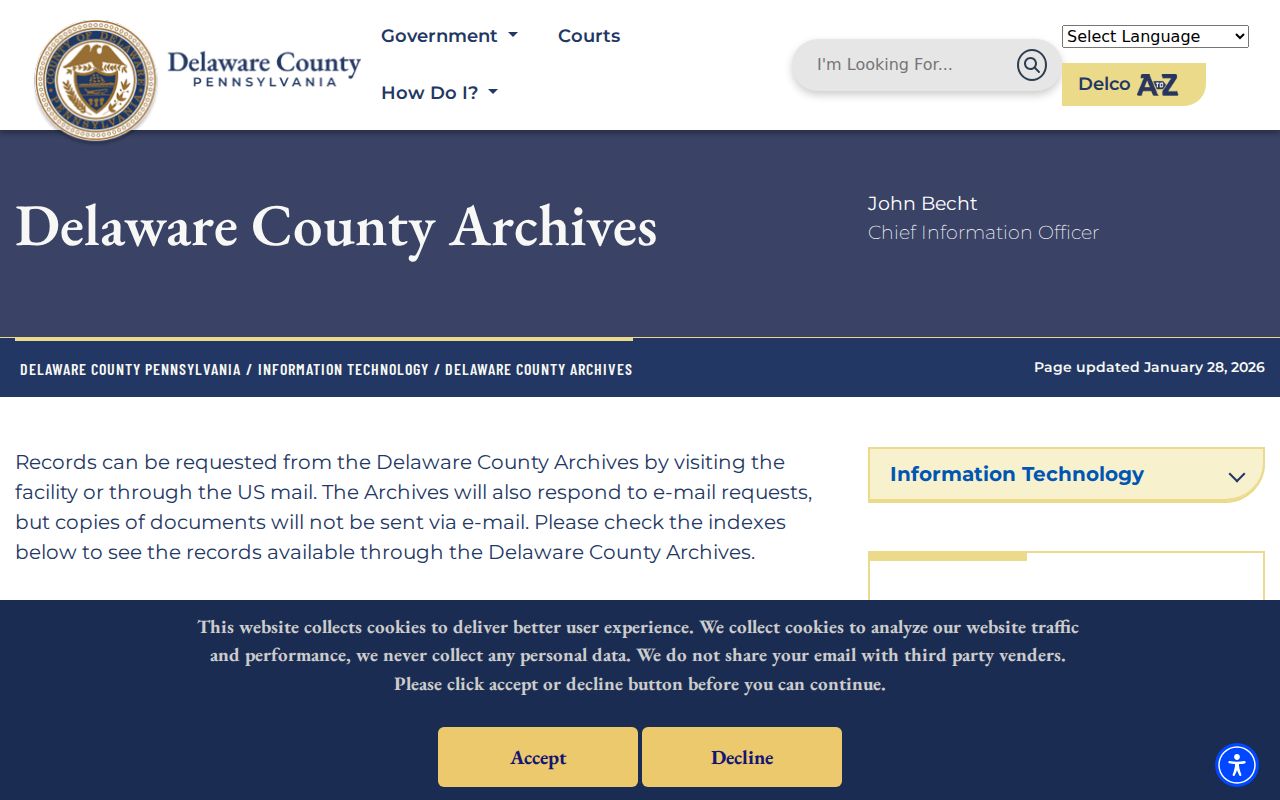
County Archives also holds historic estate, will, administration, marriage, court, naturalization, and veteran indexes. Its historic records are a separate route from Recorder land records.
Chester Previous Residents Death Gap
The county's 1893-1906 death-register index does not show deaths occurring in the City of Chester, and the County Archives says their whereabouts are unknown. Do not turn a failed search of that register into a conclusion about a former Chester resident. Route the question to the period's newspapers, cemetery and funeral collections, probate, church records, State Archives finding aids, and DCHS obituary material instead.
That gap makes the evidence trail more important. A death-era clue may close an address timeline, but it still needs its source and date. A directory listing before a death notice remains a dated listing, not proof of every person in the household.
Chester City Address Files
City-held records can date a change to a property without identifying every household. Chester's Community and Economic Development contacts route planning, zoning, permit, inspection, and building-code questions. The City directory lists Planning and Zoning at 610-447-7821, License and Inspections at 610-447-7894, and Building Code at 610-447-7726. No online permit or code-search interface was found in the reviewed sources, so the correct first move is a counter inquiry with the address, a project name or permit number if known, a date range, and the type of file sought.
If a document is not produced at the counter, make a narrow City Right-to-Know request. Pennsylvania's Right-to-Know Law, Act 3 of 2008, normally gives an agency five business days to respond and permits one 30-calendar-day extension. A request for a final permit, inspection, notice, agenda, or defined plan is more likely to locate a record than a request for everyone associated with an address. Court files follow the court and OJS process rather than the ordinary Right-to-Know route.
The City file can establish a project or physical-change date. It does not prove that a permit applicant, property party, or contractor was a prior resident. Keep the City record beside the deed and directory timeline instead of turning it into a household claim.
Chester Previous Residents Estate Endpoints
Estate records can provide an endpoint for a property or family trail. The historical Archive index includes estate files from 1789-1950, wills from 1789-1945, and administrations from 1790-1950. For later matters, use the Register of Wills guest search: select Login as Guest, then Search Public Records and Case Names. The online search is free, but document images are withheld for privacy and the official order or counter route is needed for a copy.
The Register of Wills capture is assigned to this Chester previous residents page. It is a useful estate and marriage-existence route, not a substitute for a deed, directory, or current-residence record.
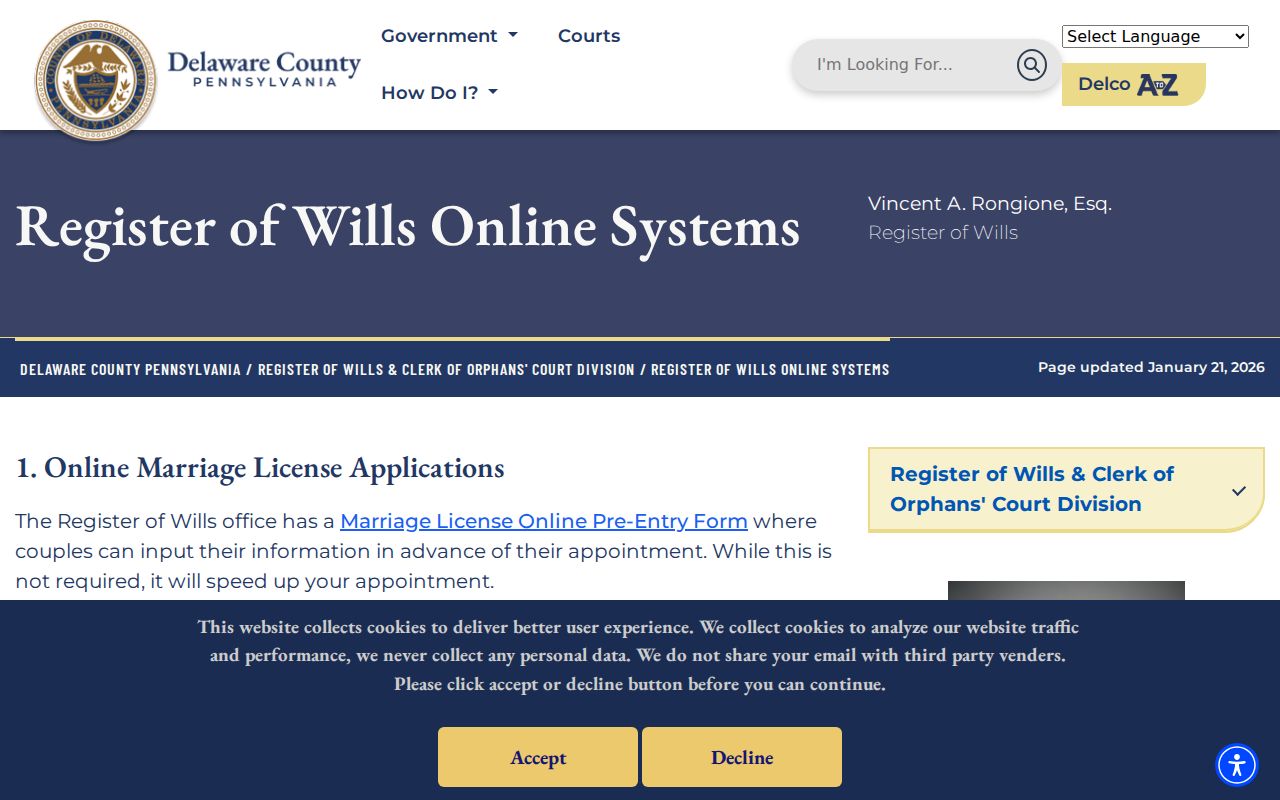
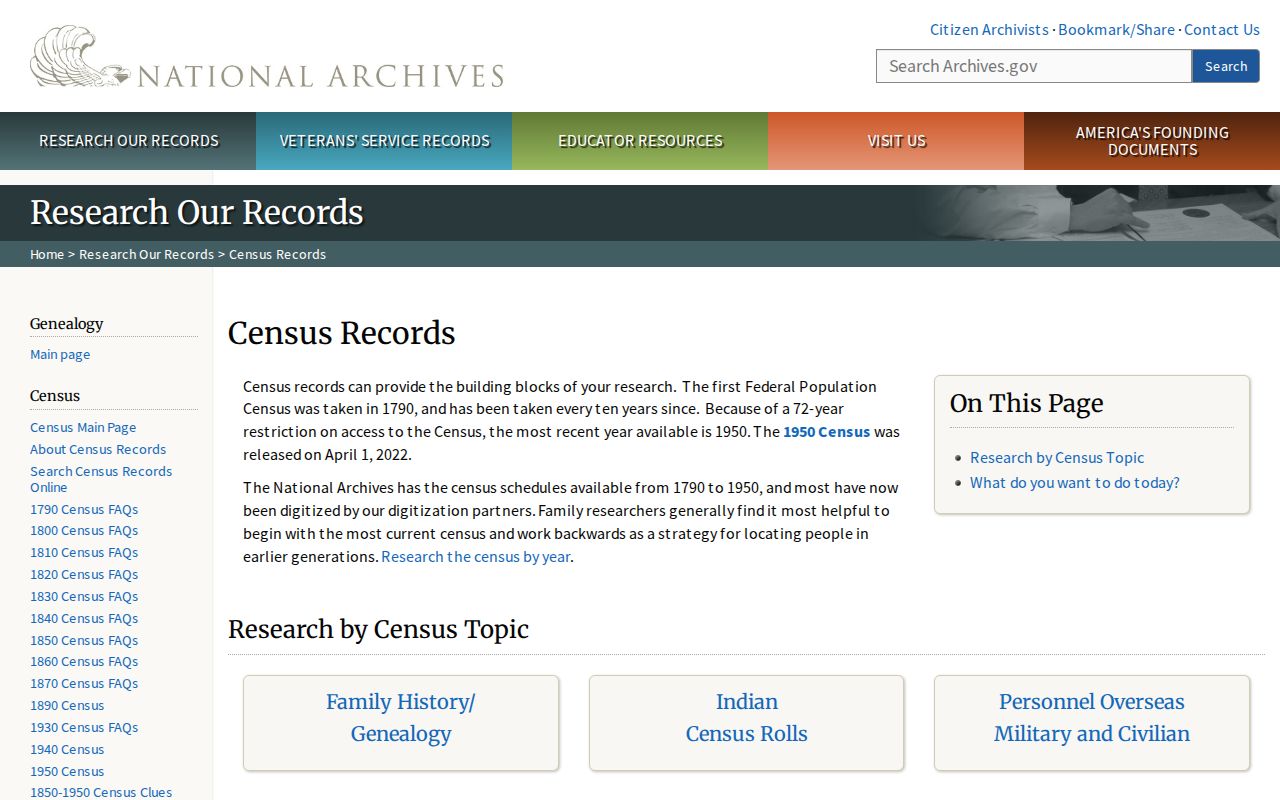
National Archives census guidance explains the release boundary for the household source used in an address timeline. The assigned capture is a reminder to match every census fact to its enumeration year.
Use these sources for family history, estate research, and an accurate account of a property's past. Do not use a past-address trail to stalk, harass, or harm anyone.